Reviewing the Peace Love Smiley Face for Real Projects
As a designer who spends more time staring at stitch maps than actual fabric, I have learned that not every machine embroidery design translates well from screen to thread. Some look crisp in a digital preview but turn into a tangled mess of jumps and trims on the hoop. When I first pulled up the Peace Love Smiley Face file, my initial reaction was one of cautious optimism. It is a simple concept, yes, but simplicity is often where designs fail the most. If the spacing is off or the density is too high, a cheerful motif can look cheap or distorted. I decided to put this Inspirational piece through its paces to see if it holds up for serious craft business use.
First Impressions and Visual Personality
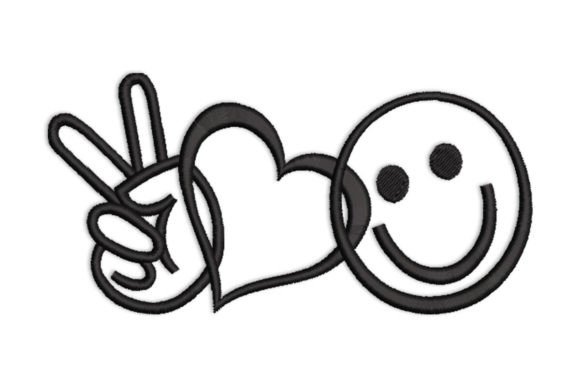
The mood of the Peace Love Smiley Face is undeniably upbeat. It taps into that retro, feel-good aesthetic that has remained popular across generations. Visually, the layout balances three distinct elements: the peace symbol, the word "Love," and the classic smiley face. From a design perspective, this triad needs careful handling. If the elements are too close, the stitches will merge; if they are too far apart, the design loses cohesion. In my review of the digital file, the spacing appeared thoughtful, allowing each element to breathe while maintaining a unified block suitable for standard hoop sizes.
The visual personality here is casual and friendly. It does not try to be overly ornate or luxurious. Instead, it aims for approachability. This makes it an excellent candidate for products that rely on emotional connection rather than high-end formalwear. When I imagine this stitched out, I see it working best with bright, contrasting thread colors. A yellow smiley face against a navy background, or white lettering on a pastel pink tote, creates the pop necessary to catch a customer’s eye in a crowded online marketplace.
Real-World Application: The Tote Bag Test
To evaluate how this design performs in a real-life scenario, I mentally walked through a recent project request: a set of custom canvas tote bags for a local community garden fundraiser. The client wanted something that screamed positivity without being overly political or religious. The Peace Love Smiley Face fit this brief perfectly. For a tote bag design, durability and clarity are key. Canvas is a sturdy fabric, but it has a visible weave. A design with too many fine details might get lost in the texture.
This particular embroidery file seems to rely on bold shapes rather than intricate shading. This is a strength for home decor and utility items. When stitched on a heavy cotton canvas, the fill stitch areas of the smiley face and the peace sign should lay flat and cover the fabric grain effectively. The word "Love" likely utilizes a satin stitch or a thick running stitch, depending on the specific digitizing choices made by the creator. If it is satin, the width must be sufficient to prevent the fabric from showing through, which would detract from the professional look of the finished product.
Versatility Across Product Lines
Beyond totes, where else does this design shine? I see strong potential in sweatshirt embroidery. A crewneck sweatshirt provides a large, stable surface area. Placing this design on the left chest creates a subtle, branded look, while centering it on the back makes a bold statement. For Etsy sellers and small shop owners, versatility is profit. This design could easily transition into baby embroidery projects, such as bibs or onesies, provided the size is scaled down appropriately. The soft, rounded edges of the smiley face are inherently child-friendly.
However, context matters. While it works for casual custom apparel, I would hesitate to use it on formal wear or high-end boutique branding unless the brand identity is specifically whimsical. It is a handmade product staple, ideal for craft fairs, holiday markets, and personalized gifts. Think of it as a reliable workhorse for your craft business inventory. It appeals to a broad demographic, from teenagers looking for retro vibes to grandparents buying holiday gifts for grandchildren.
Technical Considerations and Potential Pitfalls
No design is without its challenges. When working with the Peace Love Smiley Face, you must pay attention to stitch density. If the digitizer packed too many stitches into the smiley face circle, it could cause puckering, especially on lighter fabrics like t-shirt jersey or thin cotton. Always test on scrap fabric first. I recommend using a cut-away stabilizer for stretchy materials to ensure the design remains stable after washing. For woven fabrics like towels or pillows, a tear-away stabilizer might suffice, but testing is non-negotiable.
Another critical factor is hoop size. Ensure the design fits comfortably within your hoop with adequate margin. If you are stitching on curved surfaces, such as caps or hats, the placement of the text "Love" becomes tricky. Curved surfaces can distort horizontal text. If the design is not specifically digitized for caps, avoid using it there unless you have experience adjusting for curvature. Additionally, check the small details. Are there tiny jump stitches between the peace sign and the text? These need to be trimmed carefully to maintain a clean look.
Fabric texture also plays a role. On highly textured fabrics like terry cloth towels, fine lines can disappear. The bold nature of this design helps mitigate that risk, but you should still verify that the thread colors contrast sufficiently with the fabric. A white design on a cream towel will vanish. Opt for high-contrast combinations to ensure the embroidery project reads clearly from a distance.
Commercial Value and Brand Consistency
For commercial embroiderers and digital product sellers, the value of a design lies in its reliability and appeal. The Peace Love Smiley Face offers high recognizability. Customers do not need to squint to understand the message. This clarity builds trust. When a buyer sees a crisp, well-stitched design, they perceive higher value in the small shop product. It enhances the giftability of the item. A pillow cover or apron featuring this motif feels thoughtful and cheerful, increasing the likelihood of repeat customers.
However, professionalism is paramount. Sloppy stitching ruins even the best design. Ensure your machine is calibrated, your needles are fresh, and your tension is correct. Use this design to showcase your technical skill. If you are selling digital embroidery files, provide clear instructions on recommended fabric types and stabilizers. If you are selling finished goods, use high-quality printable mockup images to show the design in situ, but always back it up with photos of the actual stitched item. Transparency about the texture and sheen of the threads builds buyer engagement.
Final Designer Notes
Before you commit to a large production run or list this as a new asset in your shop, take these practical steps. First, confirm the licensing terms. Can you use this for commercial embroidery? Most designers allow finished product sales, but restrictions on reselling the digital file itself are standard. Second, test the design in black and white. If it loses its impact without color, the contrast may be insufficient. Third, inspect the stitch path. Efficient stitching reduces thread breaks and production time.
The Peace Love Smiley Face is a solid addition to any Inspirational design library. It is not revolutionary, but it is effective. It serves a specific market need for positive, retro-inspired decor and apparel. By respecting the technical requirements of fabric texture, stabilizer choice, and thread contrast, you can transform this simple digital file into a high-quality embroidered patch, garment, or home accessory that resonates with customers. Treat it with the care it deserves, and it will serve your craft business well.