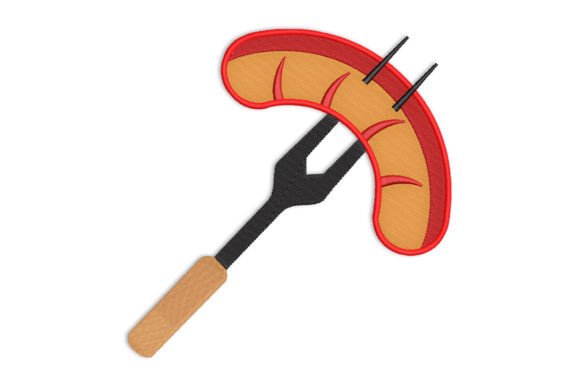
Sausage and Barbeque Fork Embroidery Review
As an embroidery designer who has spent countless hours digitizing, testing, and stitching out thousands of patterns, I approach every new machine embroidery design with a critical eye. It is not just about whether the pattern looks good on a screen; it is about how it translates to fabric, how it holds up in the wash, and ultimately, how it appeals to the end customer. Recently, I had the opportunity to test the Sausage and Barbeque Fork design for a client’s personalized gift shop. This piece falls squarely into the Kitchen category, but its charm extends far beyond mere utility. Here is my honest review of how this whimsical design performs in a real-world production environment.
First Impressions: Whimsy Meets Culinary Charm
The moment I loaded the embroidery file into my software, the mood of the design was immediately apparent. It is playful, slightly rustic, and undeniably charming. In a market saturated with generic floral motifs and standard monograms, the Sausage and Barbeque Fork offers a touch of humor and personality. It feels handmade and authentic, appealing to customers who appreciate a bit of quirkiness in their home decor. The lines are clean, suggesting a modern yet classic aesthetic that does not feel overly seasonal, meaning it can be sold year-round rather than just during summer barbecue seasons.
For a small shop product, this emotional appeal is crucial. Customers are not just buying a stitched image; they are buying a feeling. This design evokes memories of family gatherings, backyard cookouts, and cozy kitchen moments. That emotional connection is what transforms a simple embroidered item into a cherished keepsake.
Versatility Across Product Lines
One of the strongest assets of the Sausage and Barbeque Fork is its versatility. While it is categorized under Kitchen, I found it adaptable to various substrates. Here is how I envision it performing across different product types:
- Embroidered Towel: This is the most obvious application. A high-quality waffle weave or terry cloth towel featuring this design makes for an excellent housewarming personalized gift. The whimsical nature pairs well with a custom name or date stitched nearby.
- Pillow Cover: For a rustic or farmhouse-style living room, stitching this onto a linen or canvas pillow cover adds a subtle nod to culinary interests without being overpowering.
- Aprons: A canvas apron with this design is a perfect gift for the home chef. It feels professional yet personal, enhancing the perceived value of the handmade item.
- Tote Bags: Canvas totes are staples for Etsy sellers. This design works beautifully as a central motif, appealing to foodies and market-goers alike.
While I typically associate such motifs with adult gifts, the playful style could also work for baby embroidery projects if paired with softer colors and used on bibs or burp cloths for a "future chef" theme. However, for wedding gift contexts, it might be best suited for casual registry items rather than formal heirlooms, unless the couple has a known love for barbecuing.
Technical Considerations for Stitch-Out Success
Before adding any new digital embroidery file to your commercial lineup, technical due diligence is non-negotiable. During my test run of the Sausage and Barbeque Fork, I noted several key factors that other makers should consider.
Fabric Texture and Stabilizer Choice
The description notes that you can stitch this on towels, pillows, and home decor. However, fabric texture plays a massive role in the final outcome. On plush terry cloth towels, small details can get lost. I recommend using a cut-away stabilizer for stretchy or textured fabrics to prevent puckering. For smoother fabrics like cotton twill or canvas, a tear-away stabilizer may suffice, but always test on scrap fabric first. The stitch density appears balanced, but on very thick towels, you may need to adjust your tension slightly to ensure the threads sit on top of the pile rather than sinking in.
Thread Colors and Contrast
To maximize visual impact, thread color selection is vital. On white or cream fabrics, warm tones like burnt orange, deep red, or charcoal gray provide excellent contrast. If you are stitching on dark fabric, ensure you use a bright underlay or switch to lighter thread colors to maintain visibility. I strongly advise creating both light and dark fabric mockups to show potential buyers how the design pops on different backgrounds. This helps manage customer expectations and reduces return rates.
Hoop Size and Placement
Always confirm the hoop size required for this design before starting. While the prompt does not specify exact dimensions, placing a design of this nature requires careful centering. On curved surfaces like tote bags or apron pockets, hooping can be tricky. Use magnetic hoops or specialized jigs if available to ensure the design remains straight and distortion-free. Misaligned embroidery instantly lowers the perceived quality of a handmade product.
Enhancing Giftability and Perceived Value
Why choose the Sausage and Barbeque Fork over a generic pattern? It comes down to giftability. A personalized item featuring this design feels thoughtful and specific. It shows the giver knows the recipient’s hobbies and tastes. For commercial embroidery businesses, this translates to higher customer trust and engagement. When a customer sees a unique, well-executed design, they perceive higher value, allowing you to price your finished product competitively.
Moreover, this design photographs well. The distinct shapes and playful theme stand out in product listings, increasing buyer engagement on platforms like Etsy. A clear, crisp photo of the stitched design on a textured towel or a neatly folded apron can serve as a powerful printable mockup alternative, showing real-life quality rather than just digital renders.
Where to Exercise Caution
While this design is robust, there are scenarios where it requires careful handling. Avoid using it on items with excessive stretch unless you have significant experience with stabilizing knits. Delicate details may not hold up well on loosely woven fabrics. Additionally, if the design includes any small lettering or intricate elements, ensure they are large enough to stitch cleanly. Always check small details after stitching to confirm clarity. If any part of the design looks muddy or merged, it may need resizing or simplification before offering it as a custom embroidery option.
Finally, always verify the licensing terms. The product description mentions it comes with certain files, but you must confirm commercial licensing rights before selling finished goods. Protecting your business legally is just as important as the quality of your stitching.
Final Verdict for Makers and Sellers
The Sausage and Barbeque Fork is a delightful addition to any embroidery designer’s library. It bridges the gap between functional kitchenware and decorative art. For Etsy sellers and small business owners, it offers a unique selling point in the crowded home decor market. By paying attention to fabric choice, stabilizer type, and thread contrast, you can produce high-quality, durable items that customers will love. Whether used for a wedding gift, a baby shower present, or a simple treat for yourself, this design delivers on charm and quality. Remember to test thoroughly, document your process, and let the whimsical nature of the design shine through in your final presentation.