Mylar Baby Bugs: A Designer’s Review for Craft Fairs
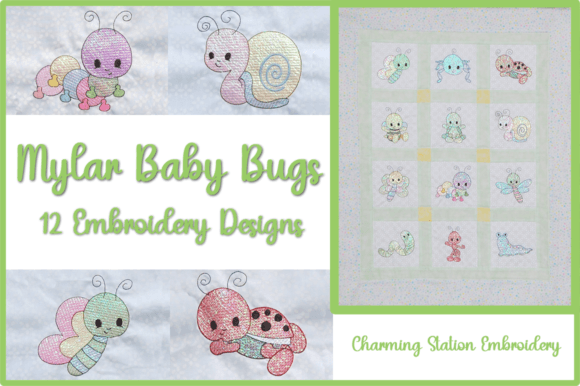
As an embroidery designer who has spent countless weekends standing behind booth tables, I know that not every machine embroidery design translates into a bestseller. Some designs look beautiful on a screen but vanish in the chaos of a busy market. Others become instant magnets for customer attention. When I first loaded the Mylar Baby Bugs collection onto my machine, I was looking for that specific spark—the kind of visual pop that stops a shopper in their tracks. This set includes 12 sweet little baby bug designs optimized for use with Mylar, and from a production standpoint, that optimization is exactly what catches my eye.
First Impressions: Shine Meets Softness
The immediate impression of Mylar Baby Bugs is one of playful contrast. In the world of Baby Animals and nature-inspired Embroidery, we often see soft pastels and matte threads. The inclusion of Mylar changes the game entirely. It introduces a metallic, reflective element that catches the light, making these designs feel festive, premium, and undeniably cute without being overly rustic or strictly farmhouse. For a craft fair seller, this shine is a tactical advantage. Under the bright lights of a convention center or the natural sun of an outdoor market, metallic accents draw the eye from ten feet away.
These twelve designs are not just random insects; they are curated characters. Whether you are aiming for a modern nursery aesthetic or a whimsical garden theme, the versatility here is strong. They feel decorative yet minimal enough to fit on small items, which is crucial for maximizing profit margins on smaller handmade product lines.
Product Applications for Maximum Sales
When planning my booth inventory, I always ask: "Where does this design live best?" With Mylar Baby Bugs, the answer is surprisingly broad, but some applications yield higher perceived value than others.
- Tote Bags and Market Bags: A single, centered bug on a canvas tote creates a charming tote bag design. The Mylar element makes the bag feel like a special occasion item rather than just a grocery carrier. It photographs beautifully for online listings, giving Etsy seller accounts a professional edge.
- Tea Towels and Aprons: Kitchen textiles are staple craft fair product categories. However, texture matters. The reflective thread stands out brilliantly against smooth cotton. An apron embroidery featuring a ladybug or bee near the pocket adds a focal point that justifies a higher price point. For tea towel embroidery, ensure the fabric is tightly woven to support the metallic thread without puckering.
- Quilts and Nap Mats: The description notes these would make a darling quilt. Using all twelve designs creates a cohesive narrative. For a boutique maker, offering a custom nap mat with a child’s favorite bug from the set is a high-ticket item that appeals to gift buyers.
- Embroidered Patches: These bugs are ideal for an embroidered patch. Because they are distinct shapes, they can be stitched on stabilizer, cut, and heat-pressed onto hats, denim jackets, or backpacks. This allows for batch production, a key strategy for busy small shop product owners.
Production Realities and Careful-Use Notes
While the aesthetic appeal is high, practical production requires attention to detail. Mylar and metallic threads behave differently than standard rayon or polyester. Here is what I observed during testing:
Stitch Density and Fabric Texture: Metallic threads are less flexible. If the stitch density is too high, the thread may break or shred. I recommend testing on scrap fabric first. On textured towels, the design might lose clarity if the stitches sink into the pile. Always use a cut-away stabilizer for stretchy fabrics like tote bags to prevent distortion, but consider a tear-away for stable quilting cottons to keep the hand of the fabric soft.
Curved Surfaces and Caps: Embroidering on caps is tricky. The curved surface of a cap can distort small details. Since these are baby bugs, they are likely small. Ensure your hoop size is appropriate and that the design is scaled correctly so it doesn't wrap around the curve too aggressively. Dark fabric can also pose a challenge; if the bug is light-colored, ensure there is sufficient underlay to prevent the background fabric from showing through the stitches.
Small Details: Tiny antennae or legs may not hold up if the design is shrunk too small. If you are creating a finished product like a small pouch, verify that the intricate parts of the bug remain visible. If they blur together, the design loses its charm.
Visual Appeal and Brand Consistency
For creative entrepreneurs, brand consistency is vital. Mylar Baby Bugs offers a consistent style across twelve variations. This allows you to create a cohesive booth display. Imagine a table with a row of pillows, each featuring a different bug from the set. The repetition creates a rhythm that is visually satisfying and encourages customers to "collect" them. This strategy increases buyer engagement and average order value.
Furthermore, these designs are highly photogenic. In the digital age, your printable mockup and online photos are your first sales pitch. The shine of the Mylar reflects light in photos, creating a dynamic image that static matte threads cannot match. This helps your Etsy listings stand out in a crowded marketplace. When used as design assets for commercial embroidery, they provide a professional look that elevates the perceived quality of your brand.
Practical Designer Notes for Success
Before you commit to full production, follow these steps to ensure success with this digital embroidery file:
- Test Thread Contrast: Mylar comes in various colors. Test different thread colors against your fabric choices. High contrast usually sells better because it is easier to see from a distance.
- Check Licensing: Always confirm commercial licensing before selling finished products. While this review assumes standard commercial use for physical goods, verifying the terms for the specific embroidery file provider is a non-negotiable step for any professional.
- Create Real Mockups: Do not rely solely on digital previews. Stitch out at least one real sample on each type of fabric you plan to sell. This helps you identify tension issues and ensures the fabric texture complements the design.
- Batch Production Strategy: Since there are 12 designs, consider hooping multiple items at once if your machine allows, or grouping similar colorways to minimize thread changes. This efficiency is key to maintaining profitability at craft fairs.
In conclusion, Mylar Baby Bugs is more than just a cute set of insects. It is a strategic tool for embroidery business owners. It combines the timeless appeal of nature motifs with the modern eye-catching power of metallic finishes. Whether you are stitching a single apron embroidery piece or a full quilt, these designs offer the versatility and visual impact needed to succeed in today’s handmade market. By paying attention to stabilizer choice, fabric texture, and display strategy, you can turn these digital assets into tangible bestsellers.