Yoga Act Keychain: A Designer’s Review for Craft Fairs
As an embroidery designer who has spent countless hours hooping, stitching, and troubleshooting designs for weekend markets, I know that not every machine embroidery design is created equal. Some are technically sound but visually boring; others are charming but impossible to stitch cleanly on certain fabrics. Today, I am putting the Yoga Act Keychain under the microscope. This isn’t just about whether the stitches look good on my screen; it is about whether this design will stop a shopper in their tracks at a busy craft fair and convert into a sale.
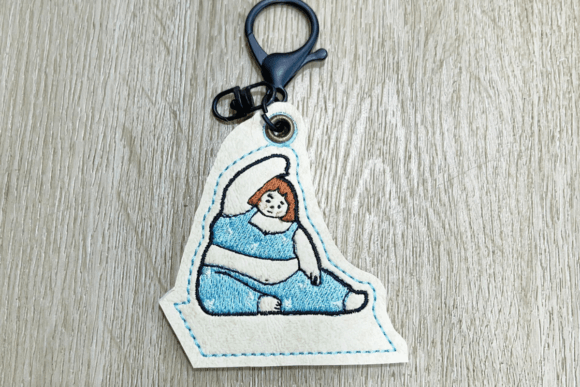
The premise is simple yet striking: a chubby girl acting in a yoga posture, customized with a name, and intended for hard materials like artificial leather. From a design perspective, this falls squarely into the modern, body-positive, and whimsical category. It is not rustic, nor is it strictly minimalist. It has personality. For Etsy sellers and boutique makers, this type of character-driven art is gold because it creates an immediate emotional connection. Customers do not just buy a keychain; they buy a reflection of their own hobbies, body confidence, or sense of humor.
First Impressions and Visual Appeal
When I first loaded the embroidery file into my software, the silhouette stood out immediately. The "chubby" depiction is rendered with soft curves, which suggests that the stitch path likely avoids sharp, jagged angles that can cause thread breaks or puckering. This is crucial for a handmade product that needs to look premium, not homemade in a negative sense. The design feels bold and cute, striking a balance that appeals to a wide demographic—from serious yogis to casual fitness enthusiasts who appreciate inclusivity.
The inclusion of personalization is a major selling point. In a sea of generic Accessories, a named item feels exclusive. However, the description notes adding letters to the "recommended height." This is a critical detail. As a designer, I advise you to test various font pairings. A script font might clash with the bold lines of the figure, while a clean sans-serif could enhance the modern vibe. The visual appeal here relies heavily on contrast. If you are stitching on dark artificial leather, you need bright, vibrant thread colors to make the figure pop. Pastels might get lost, reducing the impact of the design.
Product Versatility Beyond the Keychain
While the title specifies a keychain, limiting this design to small accessories would be a mistake. In my experience preparing booth displays, variety drives sales. Here is how I see the Yoga Act Keychain performing across different products:
- Tote Bag Design: Placing this on a canvas tote creates a statement piece. It transforms a basic bag into a craft fair product that screams personality. Ensure you use a cut-away stabilizer to support the weight of the bag and prevent distortion.
- Apron Embroidery: For the culinary yogi, this works beautifully on a bib apron. It adds a touch of whimsy to kitchen wear. However, watch the stitch density; too many layers on thin cotton aprons can cause stiffness.
- Tea Towel Embroidery: This is tricky. Tea towels have a loose weave. You must use a water-soluble stabilizer on top and bottom to keep the stitches from sinking into the fabric texture. If done correctly, it makes a charming gift set.
- Embroidered Patch: This is perhaps the most versatile application. Stitching on felt or twill allows you to create iron-on or velcro-backed patches. These are excellent small shop product additions because they are easy to ship and apply to jackets, bags, or hats.
- Caps and Hats: The description mentions hard materials, but caps are curved. If you attempt this on a cap, you must use a strong backing stabilizer and possibly resize the design to fit the front panel without wrapping around the sides.
Production Practicality for Batch Selling
For those of us running a business, time is money. Is this design practical for batch production? Generally, character designs with solid fills can be time-consuming. You need to check the stitch count (which you should verify in your specific file details) to estimate run time. If the design is too dense, it may take ten minutes per unit, which kills your profit margin on low-cost items like keychains.
I recommend testing the design on scrap fabric first. Specifically, test on artificial leather or vinyl, as suggested. These materials do not breathe like cotton, so needle heat can be an issue. Use a leather needle and perhaps a Teflon foot to prevent sticking. Also, inspect the spacing between the figure and the name. If the letters are too close to the yoga figure, the threads may overlap, creating a messy, tangled look that detracts from the finished product quality.
Photography is another consideration. Does the design photograph well? Bold outlines and high-contrast colors tend to look better in thumbnail images on Etsy or Instagram. If the details are too tiny, they will disappear in online listings. Make sure the facial features or posture details are large enough to be recognized from a distance. This affects your printable mockup creation as well; if the design doesn't look clear in a digital mockup, it won't sell online.
Common Pitfalls and Careful-Use Notes
Even the best digital embroidery file can fail if applied incorrectly. Here are the specific challenges I foresee with the Yoga Act Keychain:
- Tiny Lettering: If the name is too small, the letters may become illegible blobs of thread. Always adhere to the recommended height for text. Test readibility from three feet away.
- Dense Stitch Areas: If the yoga figure has large solid-filled areas, ensure your machine tension is perfect. Puckering is the enemy of professional-looking commercial embroidery.
- Fabric Texture: Textured towels or fluffy fabrics can swallow small details. Avoid using this design on high-pile fabrics unless you use a topping stabilizer.
- Dark Fabric: On black or navy leather, ensure your thread has a slight sheen or brightness. Matte threads can look dull and flat against dark backgrounds.
Maximizing Booth Display and Brand Consistency
When setting up your craft fair table, consistency builds trust. If your brand is about joy and inclusivity, the Yoga Act Keychain fits perfectly. Group it with other wellness-themed items. Use it as a loss leader or an add-on item. For example, "Buy a tote, add a personalized keychain for $5." This increases average order value.
To maximize buyer engagement, have samples on different materials. Show the design on a leather keychain, a canvas pouch, and a patch. This demonstrates versatility and helps customers visualize the design assets in their own lives. Remember, people buy with their eyes first. A well-stitched, vibrant sample draws people in.
Finally, always confirm commercial licensing. Just because you bought the embroidery file does not automatically mean you can sell unlimited finished goods. Check the terms provided by the designer. Most allow physical sales, but some restrict digital resale or require attribution. Protect your business by staying compliant.
In conclusion, the Yoga Act Keychain is a strong contender for your product line. It combines trending body-positive themes with the high-margin potential of personalization. By paying attention to stabilizer choices, thread contrast, and appropriate product pairing, you can turn this single design into a standout star of your next market season. Test it, tweak it, and let it bring a smile to your customers' faces.