Review: Openwork Christmas Tree for Business Merch
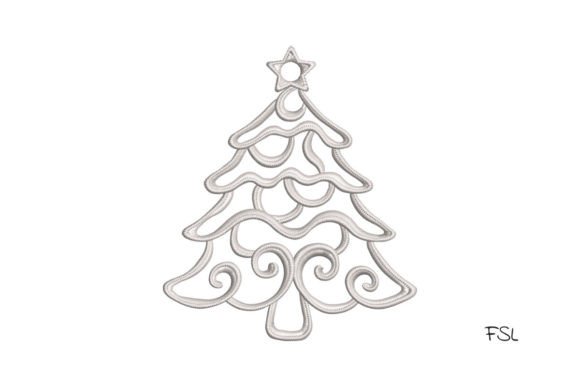
As an embroidery designer who has spent years digitizing and testing files for commercial use, I approach every new machine embroidery design with a critical eye. It is not enough for a pattern to look pretty on a screen; it must perform under the needle, hold up to washing, and serve a strategic purpose for the brand using it. Recently, I evaluated the Openwork Christmas Tree, a unique openwork lace fir tree intended for holiday decor. While the product description highlights its use as an exquisite decoration for a Christmas tree or New Year’s interior, my focus was strictly on its viability for small business merchandise and branded applications.
First Impressions: Visual Personality and Brand Fit
The immediate visual impact of the Openwork Christmas Tree is one of delicate elegance. Unlike traditional, solid-fill holiday motifs that can appear heavy or cartoonish, this design utilizes an openwork technique that mimics the airy structure of lace. This gives it a sophisticated, premium feel rather than a playful or rustic one. For a boutique, a high-end bakery, or a floral studio, this aesthetic aligns perfectly with a brand identity that values craftsmanship and subtlety.
The "openwork" nature suggests transparency and lightness, which is crucial when considering how the design will interact with various fabrics. It does not shout; it whispers. This makes it an excellent candidate for brands that want to convey warmth and tradition without sacrificing modern minimalism. However, this delicacy also raises immediate questions about durability and visibility, which are paramount for commercial embroidery projects.
Real-World Applications for Small Business Merch
When integrating a seasonal design like this into a product line, versatility is key. Here is how I envision the Openwork Christmas Tree performing across different merchandise categories:
- Embroidered Patches: This is perhaps the strongest use case. An openwork design on a patch allows the background fabric or garment color to show through the negative spaces. This creates a custom, integrated look that feels more expensive than a standard solid patch. It works exceptionally well for limited-edition holiday gifts or loyalty rewards.
- Apron Embroidery: For cafes and bakeries, staff uniforms are walking billboards. Placing this design on the chest pocket or lower corner of a canvas apron adds a festive touch that is professional rather than costumey. The lace effect complements the texture of natural fibers like cotton and linen often used in hospitality uniforms.
- Tote Bag Design: Canvas tote bags are a staple for handmade brands. The openwork structure prevents the design from becoming too stiff or bulky, which is a common issue with large solid fills on flexible bags. It serves as a subtle branding element that enhances the perceived value of the handmade product inside.
- Cap Embroidery: Using this on headwear requires caution. The curved surface of a cap front can distort intricate openwork details. If used here, it should be scaled down significantly and placed off-center for a modern, asymmetric look, avoiding the center panel where tension is highest.
Critical Considerations for Production Quality
While the aesthetic appeal is high, the technical execution of the Openwork Christmas Tree demands precision. As a designer, I advise reviewing several technical factors before committing to a large production run.
Stitch Density and Fabric Texture: Openwork designs rely on the stability of the surrounding stitches to maintain their shape. If the stitch density is too low, the design may unravel or lose its definition after washing. Conversely, if the density is too high for an openwork style, it defeats the purpose of the lace effect. You must test this on your specific fabric. Delicate silks may pucker, while sturdy denims might provide the necessary contrast. Always use a appropriate stabilizer; a cut-away stabilizer is often safer for openwork to prevent distortion over time, especially on items that will be washed frequently.
Thread Colors and Contrast: Because the design is defined by its negative space, thread choice is critical. A monochromatic look (white on white, or cream on beige) emphasizes texture and elegance. However, for brand recognition, you might need higher contrast. Test the design in black and white first to ensure the outline remains visible without color reliance. If your brand uses specific thread colors, ensure they do not blend into the garment fabric, rendering the intricate details invisible from a distance.
Size Limitations: Do not assume this design scales infinitely. Intricate openwork can become a tangled mess if reduced below a certain threshold. Check the recommended hoop size and minimum dimensions provided with the digital embroidery file. If you plan to use it as a small chest logo, verify that the connecting bridges in the lace pattern are thick enough to survive the embroidery process without breaking.
Enhancing Brand Identity and Customer Trust
Incorporating a well-executed design like the Openwork Christmas Tree into your small business merch strategy does more than just add holiday cheer. It signals attention to detail. Customers associate high-quality embroidery with premium products. When a customer receives a tote bag or apron with a crisp, clean, and aesthetically pleasing embroidered logo or accent, their trust in your brand increases.
This design supports visual consistency if your brand leans towards artisanal or elegant themes. It avoids the generic clip-art look that plagues many seasonal promotions. By using a unique embroidery file that requires skill to execute properly, you differentiate your custom apparel from mass-produced alternatives. This differentiation is crucial for Etsy sellers and craft businesses competing in saturated markets.
Practical Designer Notes for Implementation
Before you purchase and produce, follow this checklist to ensure success:
- Verify File Details: The product description notes it is a beautiful openwork lace fir tree, but it does not specify exact stitch counts, file formats, or license terms. Always confirm these details with the seller. Ensure you have the correct format for your machine (PES, DST, JEF, etc.) and that the license covers commercial use.
- Create a Printable Mockup: Before stitching a single thread, create a printable mockup or digital composite showing the design on your intended garment. This helps clients or stakeholders visualize the final product and approve the placement.
- Test on Real Fabric: Never skip the sampling phase. Stitch the design on the actual fabric you intend to use. Check for puckering, thread breaks, and registration issues. Compare it beside other design assets to ensure it fits your brand’s visual language.
- Consider the Finished Product: Think about the end user. Will this item be washed weekly? If so, reinforce the edges of the openwork. Is it a decorative piece? Then you can prioritize aesthetics over extreme durability.
In conclusion, the Openwork Christmas Tree is a sophisticated asset for the right brand. It is not a one-size-fits-all solution, but for businesses aiming to project elegance and craftsmanship, it offers a distinct advantage. By respecting the technical constraints of openwork embroidery and strategically applying it to patches, aprons, and totes, you can create memorable, high-value merchandise that strengthens your brand identity throughout the holiday season and beyond.